Our employers have something in common with generative AI—they are taking advantage of unpaid efforts that they don’t have to pay for.
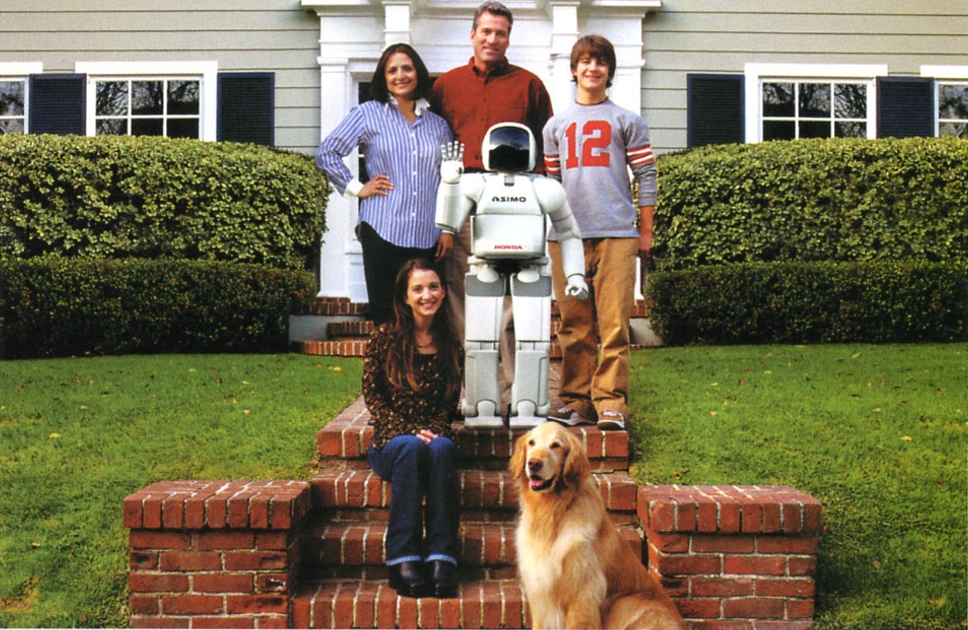
Here’s a thought experiment. Imagine a profit-maximizing employer choosing between a human worker and an AI-empowered android capable of performing the same tasks. The android has obvious advantages from the employer’s perspective: no sick days, no family obligations, no need for benefits, no possibility of joining a union.
There’s another momentous difference. The android’s production costs—design, assembly, programming — must be paid for, along with the electricity it must consume to remain operational. By contrast, the human worker’s production costs—the decades of parental time and money that went into raising and educating the actual person—appear nowhere in employers’ accounts. Neither do the ongoing maintenance costs: the food, healthcare, rest, and above all the care labor, disproportionately performed by women, that keeps the human worker functional from day to day.
This asymmetry is not a minor bookkeeping oversight. It is an organizing principle of what economists call “human capital theory —the framework that now dominates how the profession thinks about workers, education, and productivity. Human capital theory has often fetishized cognitive skill, and its empirical applications focus on the returns to education, particularly the college wage premium. In recent years some economists have extended attention downward to early childhood interventions.
But even the most expansive versions of the framework overlook the costs that families incur raising children, assuming these are fully compensated by the subjective rewards. Also, they fail to show how both employers and fellow citizens benefit economically from “investments” of unpaid care in the production, development and maintenance of human capabilities.
The human capital paradigm is now cracking open from other directions that I’ll explore in later posts. Here, I want to emphasize the positive “externalities” or “spillovers” of care provision: it generates economic benefits that care providers cannot directly capture. Here again, AI tells a story.
AI companies occupy a position rather like that of the employer in my thought experiment. They pay for the machinery required to deploy knowledge, but not for most of the human effort that originally produced that knowledge—or for the social institutions that preserve, organize, and replenish it.
Scientists, inventors, artists, and writers who contribute to our collective understanding of the world often generate benefits not reflected in their remuneration. In the lingo introduced in my previous post these benefits are largely “non-rival” and “non-excludable.” Today, anyone with access to a public library can access many of them for free. Once patents or copyrights have expired, they can also reproduce them for free.
Free access, however, requires institutional support–public spending to build and maintain libraries, including those that take virtual form, such as Wikipedia and other sources stored on the Web. As our digital knowledge resources expand, we need better ways of organizing and accessing them. Firms like Anthropic, OpenAI, and Google DeepMind are developing generative AI that promises faster and more efficient access to the sum total of human knowledge, along with capabilities to apply it in new ways. This represents genuinely valuable innovation.
However, these firms are maintaining proprietary control over their computer code and the algorithms used to train their artificial agents to think like us. They have not completely enclosed the underlying knowledge completely, but they have erected proprietary toll gates around some of its most powerful new uses. While they initially offered many services for free, their business model aims to generate revenue through subscriptions and per-unit charges. Unlike a public library, these firms are privatizing access to a public good, generating profits that are not directly benefiting the original knowledge creators—or earlier efforts to improve access to that knowledge.
The effects of this enclosure are illustrated by its impact on an earlier digital innovation–the entirely free, non-profit, volunteer-maintained project known as Wikipedia, a major source of training material for generative AI. Digital scraping of this massive text was free because it was produced by people who gave their labor away on the understanding that the result would stay open.
Wikipedia’s existing text is a stock of information on an openly licensed knowledge commons that remains accessible. But what will happen to the flow of resources needed to maintain and increase that stock, provided by a pool of roughly 100,000 active volunteer editors whose unpaid efforts sustain it? Bots and crawlers now shape traffic and more and more people get Wikipedia-processed content that has been digested and delivered by AI.
A reader who is served indirectly is unlikely to click “edit” on an entry, to see the fundraising banner, or even to recognize where the answer came from. As the Wikimedia Foundation puts it, “With fewer visits to Wikipedia, fewer volunteers may grow and enrich the content, and fewer individual donors may support this work.” Meanwhile, those who devoted time and money to curating information have subsidized the costs of the most heavily capitalized firms on earth.
Similar transfers are apparent further down the information supply chain. The human beings generating the ideas for generative AI don’t find it easy to claim any payback. In July, a judge approved a $1.5 billion settlement for authors whose books Anthropic had acquired from pirate libraries while assembling its training collection. That sounds substantial until it is compared with the scale of the company: Anthropic’s annualized revenue had reportedly reached $65 billion the same month, and its investors valued it at approximately $965 billion.
I speak from experience when I say that it is difficult to ascertain which intellectual property has been appropriated. While I have joined another class-action suit against Anthropic, it names only a small percentage of my lifetime publications, and the legalese involved is remarkably opaque.
Publicly-funded libraries and non-profit organizations (such as the colleges and universities where I’ve worked throughout my career) exemplify social institutions that not only create public goods but also help assure those voluntarily contributing to the public good that the public will indeed benefit.
We could, in principle, regulate and redistribute the benefits of the generative AI technologies that are emerging. Last June, Senator Bernie Sanders proposed the American AI Sovereign Wealth Fund Act, which would regulate and impose a one-time tax on the country’s largest artificial intelligence companies, payable in shares that would provide the American public a 50% ownership stake. Anthropic, OpenAI and others have themselves acknowledged some of the potential benefits. Perhaps they are hoping that the public will also pay potential social costs, such as increased unemployment.
According to Gallup’s survey of August 3-24, about 27% of employed Americans worry that technology will soon make their own job obsolete, up from 20% in 2025. Anxiety is particularly great among workers under age 45. But is the technology to blame, or an economic system that has long treated labor as a cost to be minimized, rather than a capability to be valued? Aren’t we humans ourselves public goods worth more than what we are able to bargain for in the labor market?
I put this question to ChatGPT. Here is the response that I received.
I would resist calling people themselves “public goods.” People are persons, not goods; describing them as goods risks treating their value as instrumental—their worth to others—rather than intrinsic.
But the intuition behind your question is important: people routinely create social value far exceeding what they can capture through labor-market bargaining. That gap is especially large when their activities generate benefits that are diffuse, delayed, difficult to exclude others from, or impossible to sell.
Examples include:
- parents raising healthy and capable future citizens and taxpayers;
- care workers sustaining other people’s capabilities;
- teachers producing civic as well as occupational capacities;
- community members creating trust, safety, and collective efficacy;
- workers transmitting knowledge and maintaining institutions;
- people whose cultural, political, or relational contributions benefit others without generating market revenue.
Labor-market pay is not a reliable measure of this value. It reflects bargaining power, property rights, institutional rules, discrimination, occupational segregation, and the employer’s ability to monetize output. A hedge-fund manager may capture much of the revenue associated with his activity, while a parent or nursing assistant cannot charge everyone who benefits from hers.
Thank you, Chat! You too could become a public good!